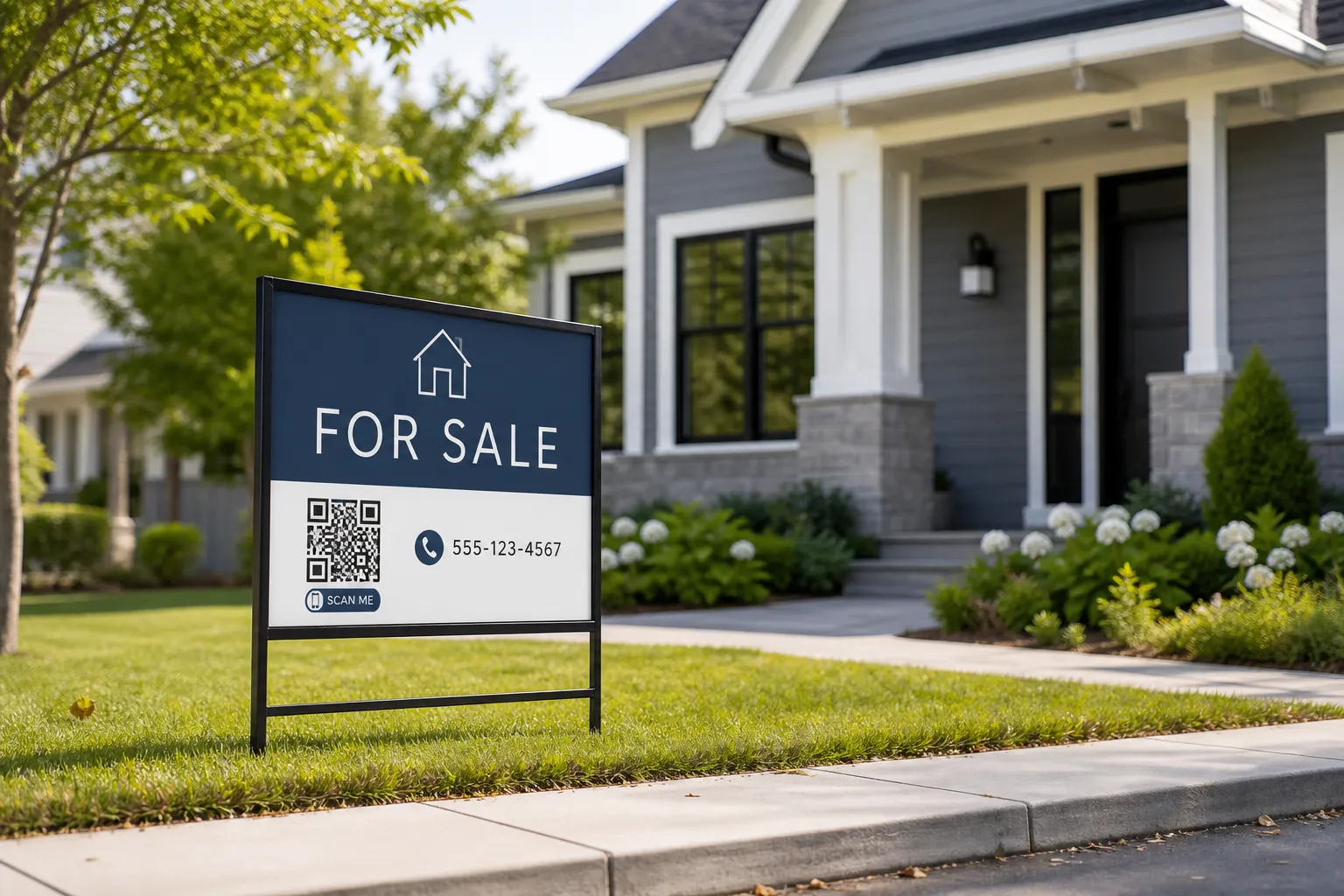
A buyer told me she once scanned a code on a “For Sale” sign, then stepped backward into a live road to get her phone’s camera to focus. The house was still occupied. The listing it opened had sold three weeks earlier, but the code still pointed there, cheerfully showing a price on a home that was no longer available. Two failures in ten seconds: a placement that pulled a stranger toward traffic, and a destination nobody had bothered to retire.
Property codes look trivial - a small square on a lawn sign - but they sit at the intersection of live traffic, occupied homes, and money. Get them wrong and you leak an occupant’s privacy, advertise stale prices, or nudge a curious passerby into the road. Get them right and they hand a genuine buyer exactly what they need without crowding the sign.
Point at a hub you actually control
The single most common mistake is linking to a page owned by someone who is about to leave the picture: a departing agent’s personal profile, a portal listing that expires, a free link built inside an account nobody else can reach. When that person or product moves on, the code becomes a dead end or, worse, drifts to a destination you no longer manage.
Link instead to a page on a domain the responsible business controls. Put the current status front and centre, along with accessible contact options, alternatives to any video or virtual tour, and a visible “last updated” date so a buyer can trust what they are reading. When the property leaves the market, do not let the old signs quietly funnel people to some other listing. Show an accurate status page - “This home is now under offer” - which respects the buyer and protects your reputation. A sign printed months before closing is exactly why the static versus dynamic QR code decision matters here more than in most other uses.
Never encode the keys to the house
A sign code is public by definition. Anyone can photograph it, and a printed square cannot tell a buyer from a burglar. So it must never carry the things that would help someone break in or intrude: no lockbox instructions, no alarm details, no private seller contact information, and no unprotected showing credentials. Anything tied to gaining entry or booking a private viewing belongs behind real authentication in a system your team runs, not behind a sticker on a post. The general privacy considerations for QR codes are worth reading alongside this, since a lawn sign is one of the most public placements a code can have.
The same discipline applies to the media the code links to. Which brings us to the part most people skip.
Read the photos the way a stalker would
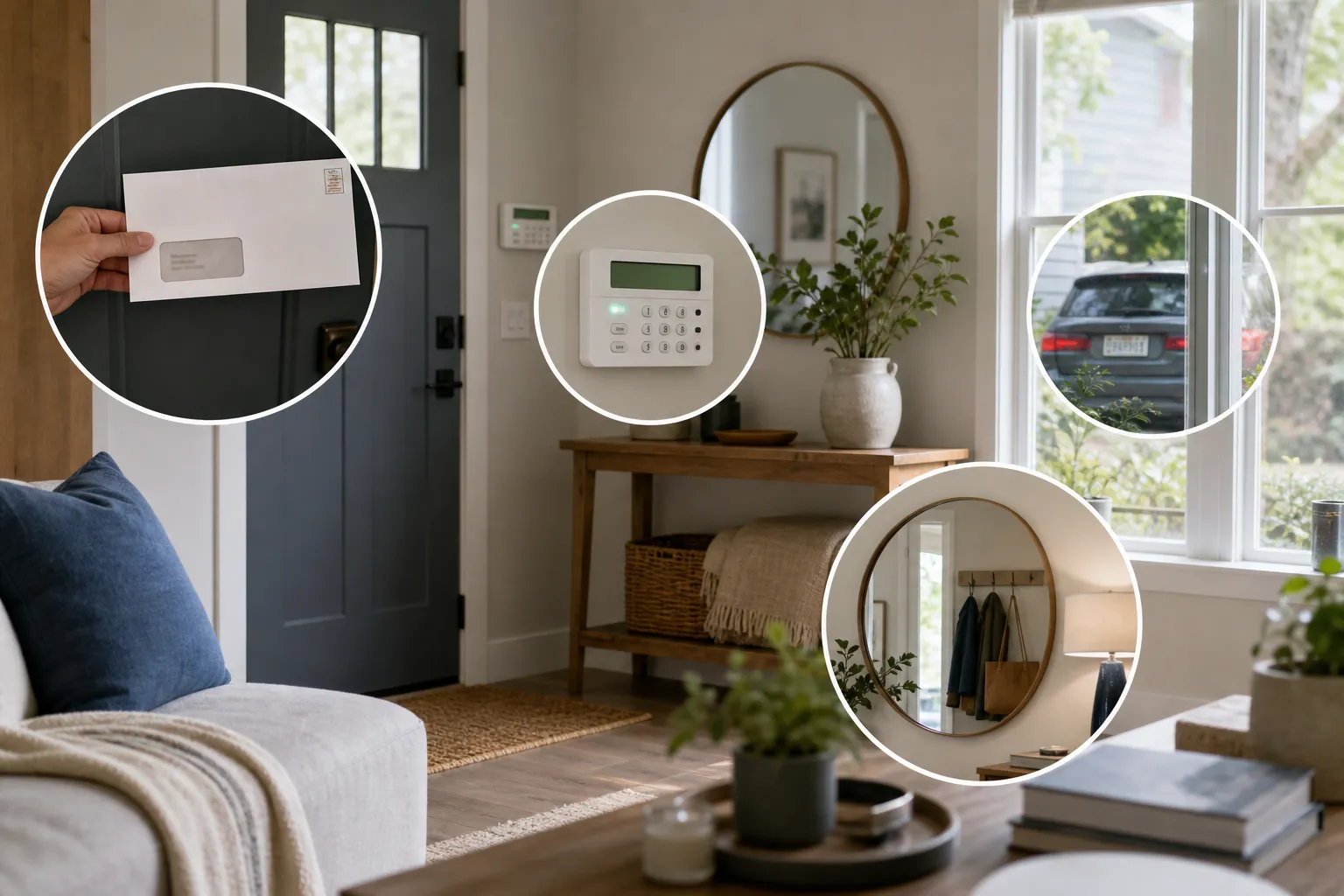
Before a listing goes live, sit with every photograph and every frame of the virtual tour and look for what a hostile stranger could harvest. It is astonishing what ends up in property media: children’s faces and school uniforms, a name on the mail by the door, a smart-home hub or visible alarm panel, a written access code on a kitchen whiteboard, a car number plate in the driveway, and - the classic - a full reflection of the photographer and the room in a bathroom mirror or a switched-off television.
Each of those is a small gift to someone with bad intentions, published to the entire internet and reachable from a sign on the lawn. Get explicit permission to record and publish, and remember that occupants who consented to a sale did not necessarily consent to their family photos being searchable. Privacy and disclosure duties vary by jurisdiction and deserve qualified review rather than a guess.
Place the sign where a body can safely stand
A code is only useful if someone can stop and scan it without risk, and here the physical world bites. People should be able to pause on a permitted footpath or verge without stepping into the road, the driveway, a construction zone, or a private garden. Size the code for the distance it will actually be read from - a code sized for arm’s length is useless on a sign people scan from a car window, and one nobody can reach over a fence is no better.
Keep the essential agent contact information printed and visible, so the buyer who cannot or will not scan still has a way to call. Walk the placement yourself, on foot, from the pedestrian’s angle and from a wheelchair user’s eye line. If reaching the code means leaning over a hedge or standing in a live lane, move it.
A tour setup that respects everyone
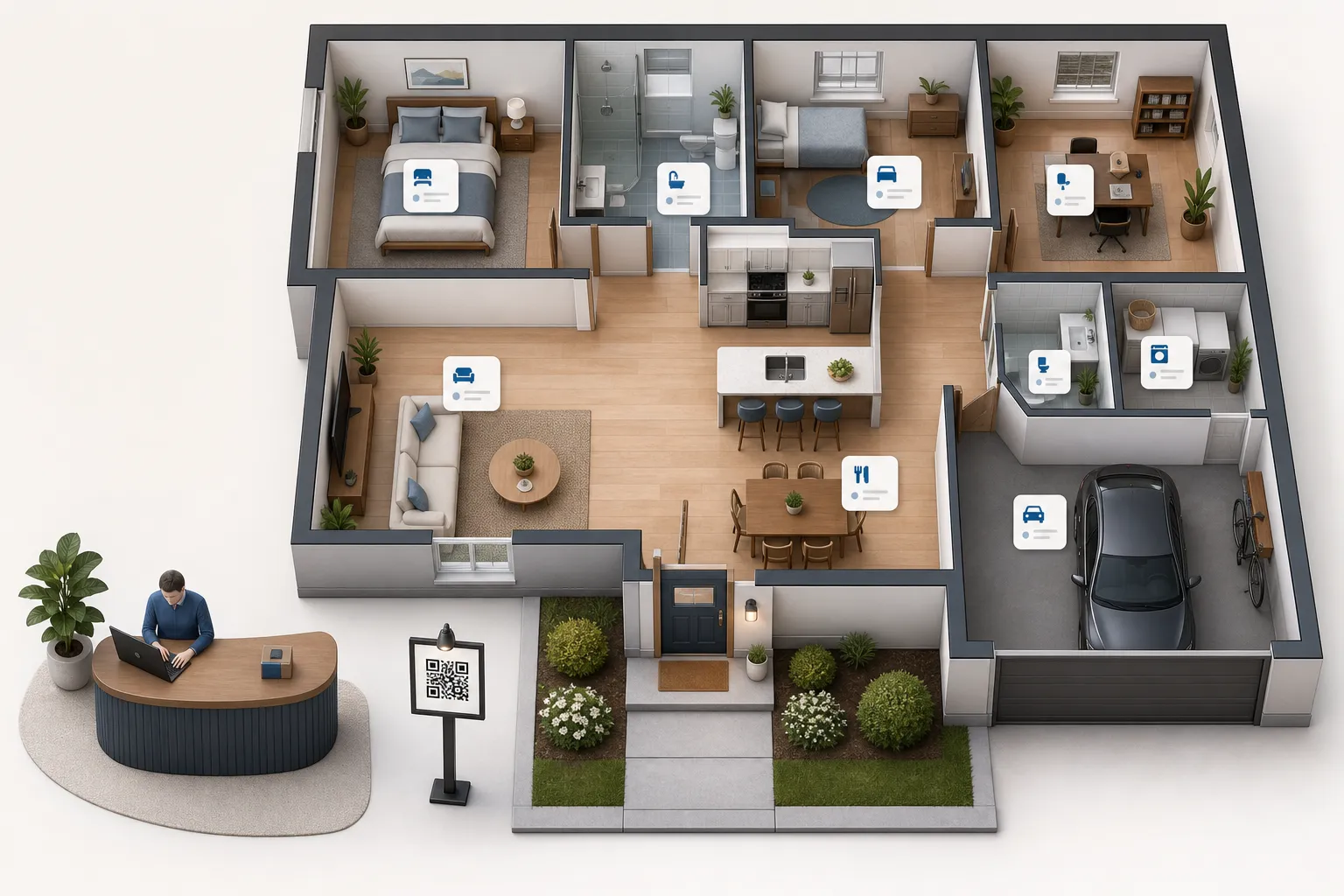
The version I trust for an open house is simple. One exterior sign carries a single code to the public listing and its accessibility information - nothing that identifies the occupants. Inside, small room cards link to captions and transcripts for renovation or specification details, so visitors get depth without a printed brochure in every hand. Visitor registration runs on a separate, staff-controlled system; the public codes embed no personal tokens and store no names. The people flow through the house; the private data never touches the lawn.
Keep it current for the life of the listing
A listing code is a promise that decays. Prices change, offers land, status flips from “available” to “under offer” to “sold,” and a sign left in the ground keeps making the old promise until someone updates the page behind it. Assign an owner, work through a pre-launch checklist confirming listing accuracy and required disclosures before launch, and inspect the physical signs during the campaign for overlays and damage - a fresh code pasted over yours can redirect your buyers straight to a fraud, which is exactly the kind of tampering covered in whether QR codes are safe to scan.
When the sale closes, retire or archive the destination according to your retention policy rather than leaving a live code pointing at a home that has new owners settling in. Do that, and the little square on the lawn becomes what it should be: a quiet, current, safe shortcut from a passing glance to the details a real buyer needs.
Create the code you need
Use HighEndDIY’s private browser tool, then test the result in the setting where people will scan it.
Create a QR CodeFound something that should be corrected? Email help@HighEndDIY.com.