I once bought a coffee grinder whose box carried a proud little QR code promising a “full setup video.” I scanned it in the kitchen with the parts spread across the counter, and the link resolved to a parked domain selling nothing in particular. The product was three years old. The marketing agency that owned the short link had folded, someone had let the registration lapse, and now the most helpful thing on the packaging pointed at a dead end. The grinder still worked. The code was the only thing that had aged badly.
That is the quiet trap with packaging. A poster lives for a fortnight and a website gets redesigned every couple of years, but a box can sit in a warehouse, then a cupboard, then a second-hand listing for the better part of a decade. Whatever you print on it has to survive all of that. The code is easy. The promise behind it is the hard part.
Point it at something worth keeping
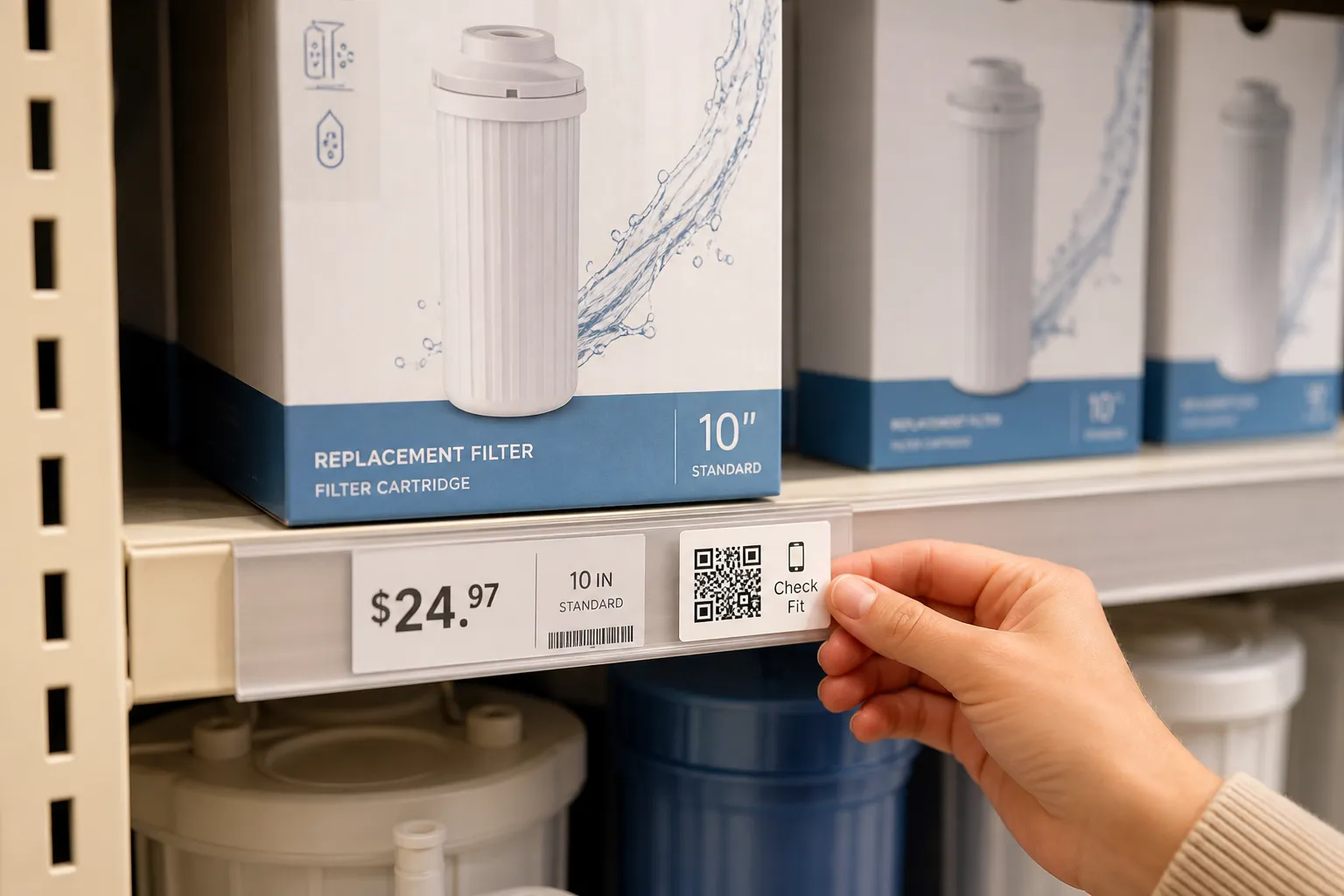
The same shelf that holds this packaging often carries a shelf-edge code doing similar work for a different product. The best packaging codes lead to content that genuinely outlives the sale. Assembly steps. Care and repair guidance. An accessible version of the manual for someone who cannot read six-point grey text on a curved surface. Ingredient or provenance detail. Region-specific recycling instructions, which change often enough that printing them permanently is a losing game. Safety updates you could not have known about when the artwork went to plate.
What does not belong behind a code is anything a person needs right now, or anything the law says must be legible on the pack itself. Do not bury an allergen warning, a dosage, or an age restriction behind a scan and a loading spinner. If you are unsure whether something is legally required to be printed, treat it as required until a qualified reviewer tells you otherwise. A code is an extension of the label, never a replacement for the parts that keep someone safe.
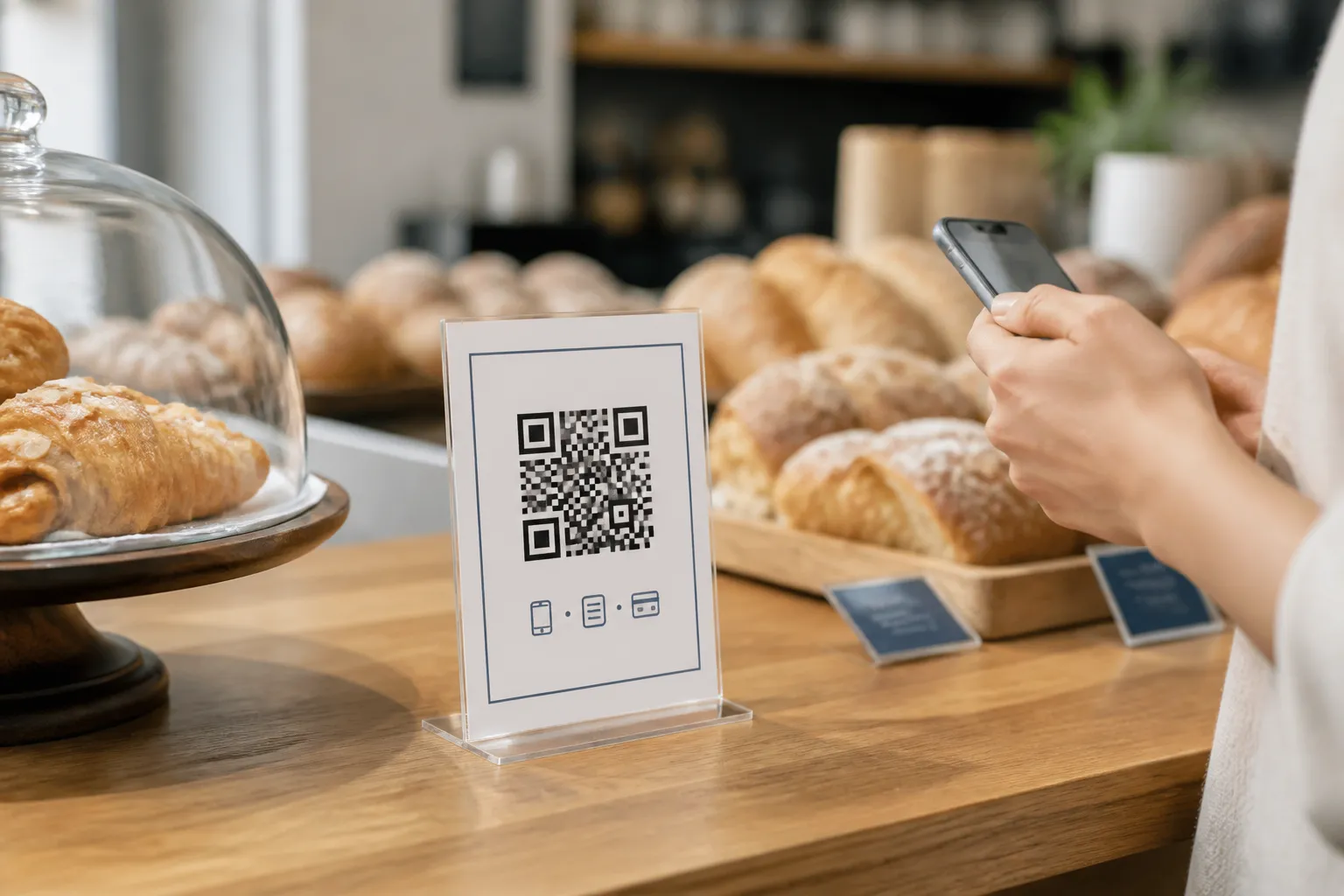
Print a plain promise next to the square: “Assembly video and accessible instructions,” alongside the domain people will actually land on. That short line of text does two jobs. It tells the buyer why to bother, and it gives them a fallback if their camera fumbles the scan.
Own the destination for the life of the product
This is where the grinder failed, so it earns its own section. Encode a URL on a domain you own outright, on an HTTPS path you control, and write that exact URL into the product specification so it is not lost when the designer moves on. If you need a redirect - and for long-lived packaging you probably do, because you will want to move content around over ten years - run it through infrastructure the manufacturer controls, and document who monitors it, who can change it, and who inherits it when the current owner leaves.
Never, ever recycle a retired product’s URL for something unrelated. Someone will scan a decade-old box expecting a filter size and instead find your new fragrance launch, and that mismatch reads as a hijack even when it is just sloppy housekeeping. Retired paths should resolve to an honest “this product is no longer supported, here is where to go” page. That costs almost nothing and preserves trust.
Respect what the package physically does to the code
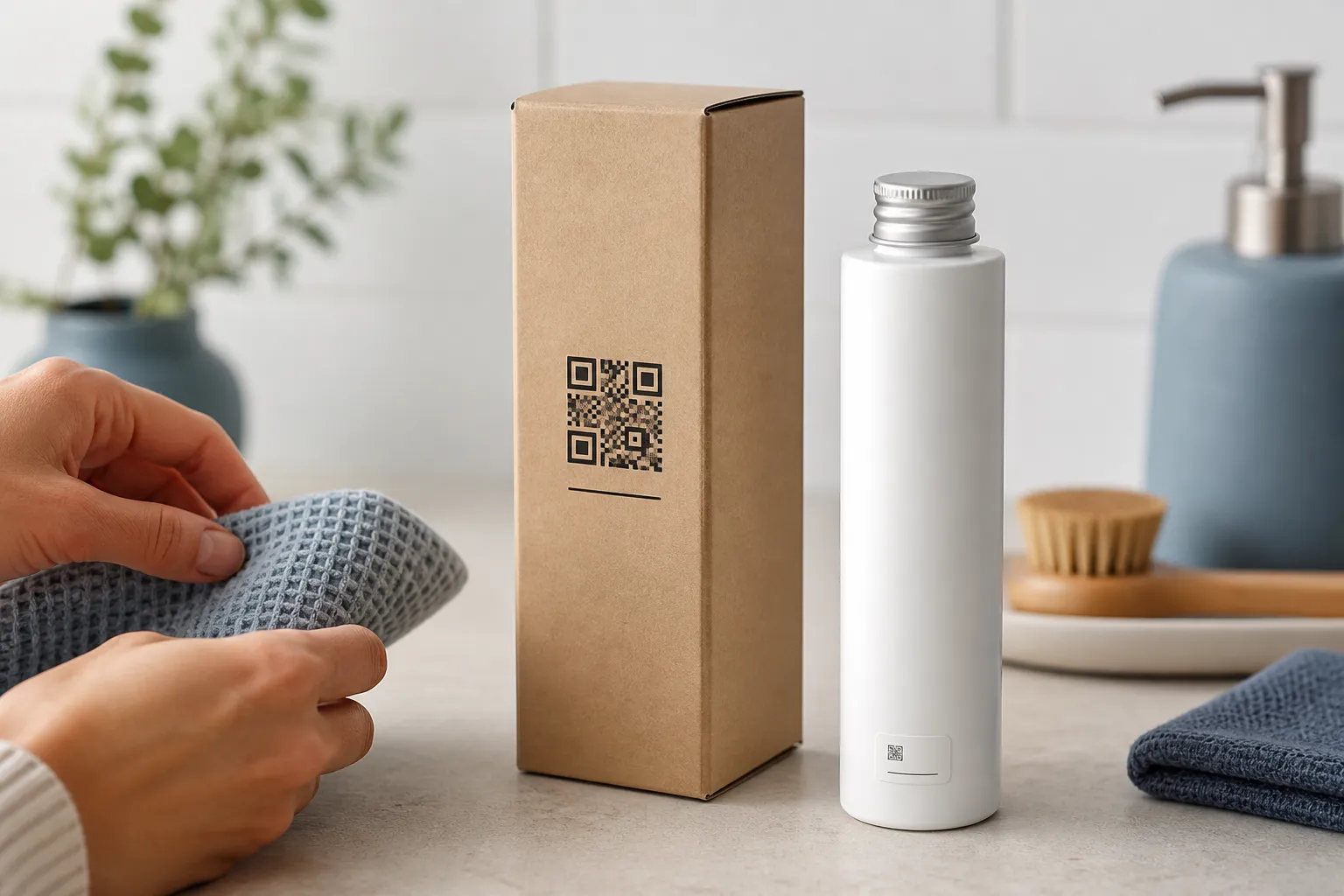
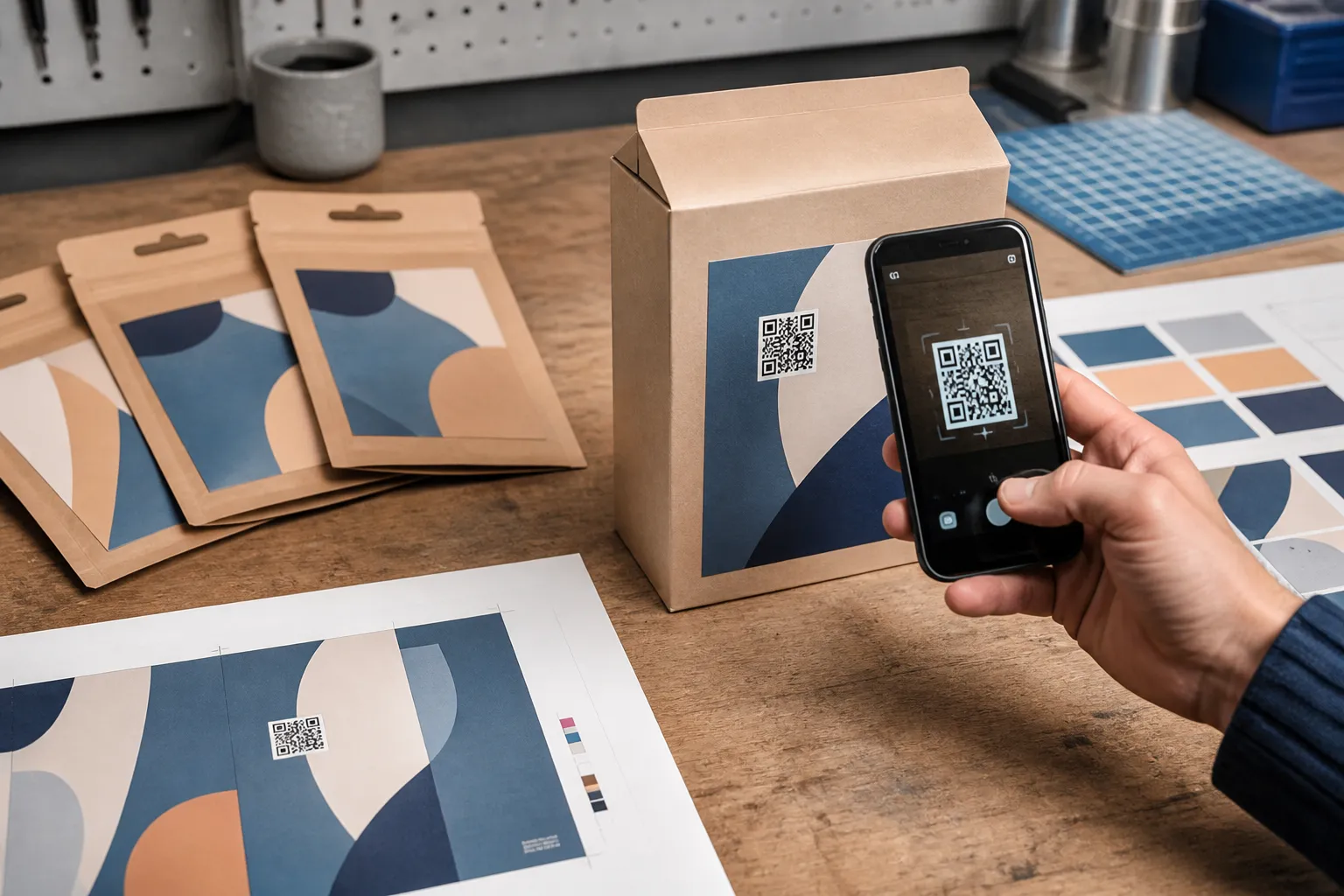
A flat proof lies to you. It always scans. The real package curves, folds, crinkles, catches the light off a foil laminate, and sometimes hides a section behind a transparent window that distorts the grid. A 22 millimetre code wrapped around a slim cylindrical bottle will only read when the phone is centred perfectly, which no tired buyer will manage. Catching that failure before the print run ships is exactly what testing a QR code before printing is for.
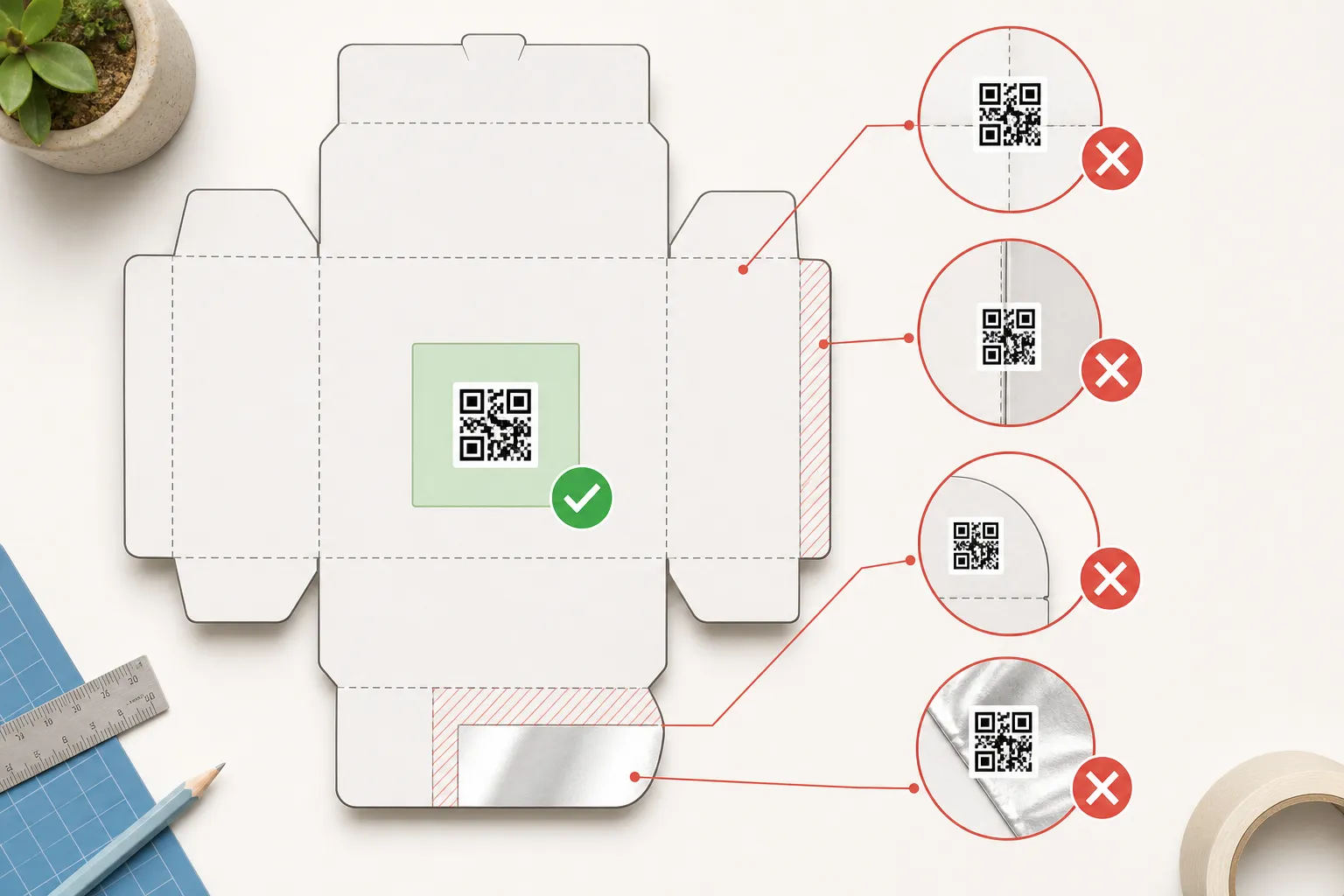
Give the code the flattest practical real estate you have, away from seams, folds, and the closure that gets handled and scuffed. Many of the same placement rules apply to any QR code in print marketing, not only packaging. Keep the quiet zone - the blank margin around the code - honest, and coordinate it with the dieline and the printer’s registration tolerances rather than your screen. On a small bottle, the honest answer is often to move the code to a flat carton panel and let the bottle keep only the batch code and the essential safety text.
Prove it on the real substrate
Ink spreads. Varnish scatters. A dark code on a metallic or kraft stock loses the contrast it had on white paper, and overprint can smear the fine modules into mush. Hand the printer a vector file rather than a low-resolution export, the difference PNG versus SVG QR codes covers in detail. None of this shows up until you print on the actual material with the actual finishing, so test there. Pull units from the start, middle, and end of a production run when you can, because colour and registration drift as the press warms and the plates wear.
Keep approved reference samples and a record of which artwork version they came from. When a batch scans poorly in the field six months later, that archive is how you tell a plate problem from a supplier swapping the substrate without telling you.
A refill bottle, done twice
A small maker sells refillable cleaning concentrate in a slim cylindrical bottle. The first design wrapped a modest code around the curve, printed the destination nowhere, and relied on a link the agency owned. It scanned about half the time and the other half people gave up.
The second design moved a larger code onto a flat side panel of an outer carton and printed the short owned domain beneath it. The bottle itself kept only what it must: the safety information and the batch label, both fully legible without a phone. The code now leads to an accessible dilution guide and a regional recycling note that the maker updates each spring. Same product, same code technology, completely different outcome, and the difference was entirely in placement, ownership, and restraint.
Create the code you need
Use HighEndDIY’s private browser tool, then test the result in the setting where people will scan it.
Create a QR CodeFound something that should be corrected? Email help@HighEndDIY.com.